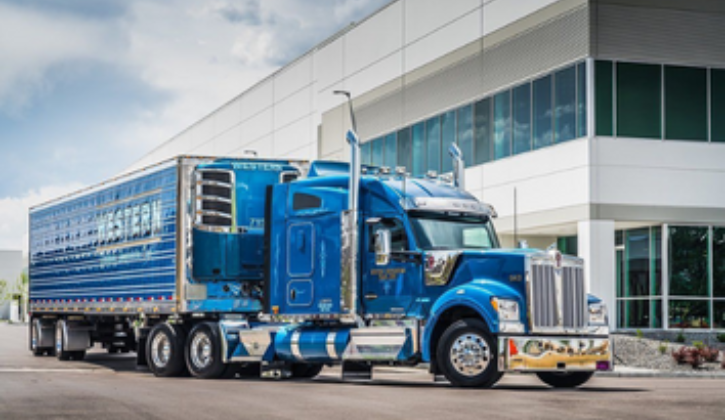
Commercial Vehicle Market Intelligence for Manufacturers
Connect demand, production, equipment, powertrain, and regulatory signals to stronger manufacturing planning decisions.
ACT Research helps OEMs, suppliers, and commercial vehicle manufacturers understand where market demand is headed — and what those signals may mean for production planning, order strategy, inventory, product development, and long-term investment. With forward-looking forecasts, market data, and analyst interpretation, ACT gives manufacturing teams a clearer view of the commercial vehicle and freight cycle so they can plan with confidence across changing market conditions.
Get Transportation IntelligenceBuild production plans around a clearer market view.
Manufacturers need more than a snapshot of current demand. Order activity, backlog, build rates, inventory, freight conditions, fleet profitability, regulatory timing, and powertrain change all affect how and when customers buy.
ACT helps manufacturing teams connect these signals into a forward-looking market view that supports demand planning, production strategy, supplier alignment, and executive decision-making.
Recommended Bullets
- Demand Forecasting: Evaluate future demand for Class 8, medium-duty, trailer, engine, and powertrain markets with forward-looking forecasts.
- Production Planning: Connect orders, backlog, build, inventory, and retail sales to better production and capacity planning decisions.
- Market-Cycle Alignment: Understand how freight conditions, fleet profitability, replacement cycles, and regulatory timing may affect customer demand.

I would recommend ACT Research to anyone that’s looking for in-depth insight into what’s happening in the commercial vehicle markets. The expertise and knowledge that goes into the service they provide, there’s not a better solution, in my opinion, for commercial vehicle data than ACT Research.

Jeff Trent
Mahle
Market intelligence for manufacturing planning decisions
For 40 years, ACT Research has helped manufacturers understand commercial vehicle market change and prepare for what comes next.
Whether your team is planning production, evaluating customer demand, aligning suppliers, preparing for powertrain shifts, or assessing regulatory timing, ACT provides forecasts and analyst interpretation that help turn market complexity into clearer planning decisions.
Production Planning & Forecasting
Use monthly updates and long-term forecasts to evaluate future demand, align build plans, manage capacity, and prepare for changes across commercial vehicle, trailer, engine, and powertrain markets.
Supplier & Capacity Alignment
Understand market demand, production timing, order activity, and inventory signals that may affect supplier planning, component demand, capacity allocation, and operational readiness.
Product & Market Strategy
Evaluate new product introductions, market expansion opportunities, powertrain transitions, and segment-specific demand with intelligence grounded in commercial vehicle and freight market context.
Benchmarking & Competitive Context
Compare market movement, order trends, retail sales, production activity, and segment performance to better understand competitive dynamics and your position in the broader market cycle.
Regulatory & Powertrain Planning
Track regulatory timing, emissions requirements, powertrain adoption, and infrastructure readiness to better understand how compliance and technology shifts may affect demand, production, and customer behavior.

Three strengths behind ACT’s manufacturer intelligence
ACT’s manufacturer-focused intelligence combines proprietary market data, disciplined forecasting methodology, and experienced analyst interpretation to help teams understand not only what changed in the commercial vehicle market, but what those signals may mean for production, demand, and strategy.
- ACT Proprietary Data
- ACT Methodology
- ACT Human Intelligence

ACT Proprietary Data
ACT’s market view begins with direct visibility into the freight, equipment, and commercial vehicle signals that shape transportation planning decisions.
By tracking market indicators across commercial vehicles, freight, trailers, used equipment, and broader economic activity, ACT helps customers understand what is changing, how signals connect, and what those shifts may mean for the road ahead.

ACT Methodology
ACT’s forecasting methodology is built on decades of market-cycle experience, industry relationships, historical data, and disciplined analysis.
We connect freight demand, equipment supply, economic activity, production trends, used equipment values, regulatory factors, and customer behavior to help customers evaluate the market with a balanced, forward-looking view.

ACT Human Intelligence
ACT’s analysts bring deep experience across freight, equipment, commercial vehicle, used truck, trailer, regulatory, and economic markets.
We do not simply report the data. We interpret what market signals may mean, how they connect across the transportation cycle, and what decisions they may help inform.
Forecasts and intelligence for commercial vehicle manufacturing decisions

North America Commercial Vehicle Outlook Plus
Commercial vehicle demand, powertrain, and regulatory intelligence for long-term planning.
ACT’s North America Commercial Vehicle Outlook Plus provides a forward-looking view of commercial vehicle demand, zero-emission vehicle adoption, powertrain trends, infrastructure readiness, and regulatory timing.
It helps manufacturers and suppliers evaluate how emissions requirements, technology adoption, and customer behavior may affect production planning, product strategy, and long-term investment.
What It Offers
- North America Commercial Vehicle Outlook coverage and monthly market updates
- Bottom-up forecasts for battery-electric, hydrogen fuel cell, and natural gas vehicles across Classes 4–8
- Infrastructure readiness analysis for charging and hydrogen refueling
- U.S. and Canadian emissions regulation timelines and planning implications
Who Benefits
- OEMs and Tier 1 suppliers planning product, production, and powertrain strategy
- Engine, component, and infrastructure suppliers evaluating future demand
- Fleet and finance teams assessing technology timing and total cost implications

North America Commercial Vehicle Outlook
Commercial vehicle forecasts for demand, production, and market planning.
ACT’s North America Commercial Vehicle Outlook helps manufacturers evaluate demand trends across Classes 4–8 vehicles and trailers over near- and long-term planning horizons.
It connects vehicle demand, economic indicators, fleet population trends, and market-cycle movement to help manufacturers align production, capacity, and strategic planning with future market conditions.
What It Offers
- Class 4–8 vehicle and trailer forecasts across 1-, 5-, and 10-year horizons
- Economic and industry drivers shaping commercial vehicle demand
- Fleet population, age, and replacement-cycle insights
- Market context for production, capacity, and demand planning
Who Benefits
- OEMs and suppliers aligning production and capacity with market demand
- Strategy, finance, and sales teams building market assumptions
- Investment and research teams tracking commercial vehicle industry performance

Freight & Transportation Forecast
Rate, volume, and freight-cycle intelligence for manufacturing demand context.
Freight conditions influence fleet profitability, replacement timing, equipment demand, and customer urgency. ACT’s Freight & Transportation Forecast helps manufacturers connect freight market movement to broader equipment and commercial vehicle demand.
What It Offers
- Truckload contract and spot rate forecasts for dry van, refrigerated, and flatbed markets
- Cass Shipments and Truckload Linehaul Index forecasts
- ACT Freight Composite Index Forecast, a freight-weighted measure of economic activity
- LTL and intermodal rate and volume forecasts
- ACT For-Hire Survey Indexes covering rates, drivers, equipment, and fleet sentiment
Who Benefits
- OEMs and suppliers connecting freight conditions to future equipment demand
- Fleet and finance teams evaluating freight-cycle timing
- Strategy and market intelligence teams assessing transportation market health

Engine Forecast
Engine demand, production, fuel type, and powertrain forecasts for North America.
ACT’s Engine Forecast helps manufacturers, suppliers, and strategy teams evaluate future engine demand across Class 4–8 trucks, including fuel type and powertrain segmentation.
It supports production planning, R&D prioritization, regulatory planning, and market strategy as emissions rules, powertrain options, and customer economics evolve.
What It Offers
- Engine production forecasts for North American Class 4–8 trucks
- Segmentation by fuel type and powertrain
- Market trend analysis tied to demand, emissions, and technology adoption
- U.S. and Canadian emissions regulation timing and planning context
Who Benefits
- Engine manufacturers and Tier 1 suppliers planning production, R&D, and capacity
- OEM strategy and product teams evaluating future powertrain demand
- Finance and investment teams assessing engine and powertrain market trends
Updated May 27, 2026
Market Update - Manufacturers
May 2026 Update
Manufacturers Face Firmer Demand Signals as Discipline Holds and Regulatory Costs Remain in Focus
May brings a more constructive commercial vehicle backdrop for manufacturers, but the recovery remains uneven by segment. ACT’s latest N.A. Commercial Vehicle Outlook shows Class 8 demand improving as freight rates strengthen and capacity tightens, while trailer demand remains softer by comparison and medium-duty signals are improving more gradually.
For OEMs, suppliers, production planners, and sales teams, the key planning signal is demand quality. Freight-market tightening, regulatory timing, and replacement needs are supporting customer engagement, but elevated equipment costs, financing sensitivity, and uneven end-market demand continue to reinforce production discipline. The May source map identifies the N.A. Commercial Vehicle Outlook, SOI N.A. Classes 5–8, and SOI U.S. Trailers as the primary sources for order activity, build plans, backlog changes, segment demand shifts, replacement cycles, and trailer activity.
Class 8
Class 8 demand continues to recover from trough conditions, but April order activity moved lower from March as expected seasonally before 2027 orderboards open later this year. ACT’s latest Classes 5–8 report notes that Class 8 orders were supported by improved spot and contract rates, regulatory clarity, and tighter freight capacity.
From a production planning perspective, the signal is constructive but still measured. Class 8 backlogs increased to a multi-year high, and build plans improved, giving manufacturers better forward visibility without suggesting a broad speculative expansion. For OEMs and suppliers, the key questions are whether rate recovery continues, how fleets time replacement ahead of EPA 2027, and whether stronger freight economics translate into sustained order conversion.
Manufacturers should monitor tractor demand, vocational demand, backlog coverage, cancellation behavior, regulatory-timing effects, and customer financing sensitivity. The market is firmer than it was through much of the prior downturn, but buyer behavior remains disciplined.
Medium Duty
Medium-duty demand improved in April, with Classes 5–7 orders rising year over year. ACT’s latest Classes 5–8 report notes that easier comparisons helped the gain, but the improvement may also reflect steadier end-market activity and some regulatory-driven positioning.
The medium-duty signal is less forceful than Class 8. Backlogs declined month over month, and body-builder challenges remain a headwind. For manufacturers and suppliers, that suggests planning should remain focused on confirmed demand, segment-level differences, and production alignment rather than assuming a broad-based acceleration.
OEMs, suppliers, and sales teams should monitor whether recent order improvement converts into sustained retail activity, whether vocational and service-oriented applications remain resilient, and whether body-builder throughput improves enough to support smoother delivery timing.
Trailers
The trailer market improved in April, but the signal remains early-stage. ACT’s May U.S. Trailers report shows net orders increased sequentially, counter to normal seasonal expectations, and rose sharply year over year against an easier comparison. OEM demand commentary also turned more constructive, though caution remained around material, labor, and future trailer pricing pressures.
For trailer manufacturers and suppliers, the planning implication is encouraging but not yet definitive. Orders have outpaced build in most months this year, but backlogs remain thin relative to long-term norms, and cancellations remain elevated despite improving from March.
Manufacturers should monitor backlog rebuilding, cancellation trends, segment-level demand across dry vans, reefers, and flatbeds, and whether stronger truckload conditions translate into firmer replacement commitments. April’s order strength is a positive signal, but the market still requires follow-through before it can be treated as a broad upcycle.
Prebuy Activity Remains Measured as Regulatory Clarity Improves
EPA 2027 remains an important planning factor for manufacturers. Regulatory clarity has helped support fleet engagement and order activity, while higher expected equipment costs remain central to customer timing discussions. The March live version framed EPA 2027 as a key force shaping demand timing, prebuy discussions, and equipment cost expectations, and that framing remains relevant in May.
For manufacturers, the challenge is balancing customer interest with disciplined production planning. Stronger freight rates and tighter capacity may increase fleet willingness to plan ahead, but elevated capital costs and uneven profitability are likely to keep prebuy behavior measured. Suppliers and OEM planning teams should monitor orderboard timing, build-slot demand, certification timing, and customer conversations around 2027-spec pricing and availability.
Medium-Duty and Vocational Segments Show Relative Stability
Medium-duty and vocational demand remain important stabilizers, but performance is mixed by end market. Vocational Class 8 continues to benefit from infrastructure, utility, energy, and data-center-related activity, while some housing- and small-business-sensitive areas remain less robust. The March version identified these same infrastructure, utility, energy, and data-center-linked drivers as stabilizing forces for manufacturers.
For OEMs and suppliers, the implication is product-mix discipline. Demand is not moving uniformly across segments, so production planning should stay closely tied to confirmed orders, application-level strength, and customer timing. Segment-specific demand visibility matters more than broad market averages.
Outlook: Discipline Continues as Conditions Gradually Improve
ACT’s May reports suggest commercial vehicle manufacturers are operating in a firmer market than earlier in the cycle. Freight rates are improving, Class 8 demand has better support, medium-duty orders are improving from easier comparisons, and trailer orders surprised to the upside in April. Still, demand remains uneven, and cost pressure continues to shape fleet behavior.
For manufacturers, the practical takeaway is disciplined readiness. OEMs and suppliers should prepare for stronger replacement-driven demand while avoiding assumptions of broad expansion. The most important signals to monitor are Class 8 order quality, backlog coverage, medium-duty follow-through, trailer backlog rebuilding, cancellation trends, EPA 2027 timing, and whether freight-rate improvement continues to support fleet profitability and equipment replacement.

Why manufacturers choose ACT Research
Manufacturing decisions depend on clear demand visibility and a forward-looking view of the commercial vehicle cycle. ACT combines direct market data, disciplined forecasting methodology, analyst expertise, and long-standing industry relationships to help manufacturers understand the signals shaping production, product, and market strategy.
- Proprietary commercial vehicle market data sourced directly from North American OEMs
- Forecast methodology built on decades of market-cycle experience
- Analyst interpretation that connects demand, production, freight, and equipment signals
- Track record of forecast accuracy and trusted industry use
- Used by manufacturers, suppliers, finance firms, fleets, dealers, and investment leaders
Market guidance for manufacturing planning decisions
ACT helps manufacturers understand the market signals that affect demand forecasting, production planning, inventory strategy, supplier alignment, and product development.
Our intelligence supports teams responsible for strategy, sales planning, finance, production, market analysis, and executive decision-making with a clearer view of commercial vehicle demand, freight conditions, equipment cycles, regulatory timing, and powertrain trends.
With ACT Research, manufacturing teams can:
- Make stronger strategic decisions with current market analysis and forward-looking commercial vehicle forecasts.
- Evaluate production and capacity plans with better visibility into orders, backlog, build, inventory, and retail sales trends.
- Connect freight conditions to equipment demand by understanding how rates, fleet profitability, and replacement cycles may affect customer buying behavior.
- Plan for powertrain and regulatory change with intelligence on emissions timing, ZEV adoption, engine demand, and infrastructure readiness.
- Spot risks and opportunities earlier across freight, economic, regulatory, equipment, and powertrain-cycle signals.
- Support financial and executive planning with market assumptions your team can defend.

Ready to connect market demand to your next manufacturing decision?
ACT helps manufacturers connect commercial vehicle demand, freight conditions, equipment cycles, regulatory timing, and powertrain trends to stronger production, product, and market planning decisions.
Whether your team is planning capacity, evaluating customer demand, aligning suppliers, preparing for emissions requirements, or building long-term market assumptions, ACT can help you develop a clearer view of what comes next.
Questions about the right intelligence for your manufacturing decisions?
ACT can help you identify the forecasts, market data, and analyst perspective that fit your planning needs.