
Dry Van Rates
Dry Van Freight Rates: Spot & Contract Market Trends - May 2026
ACT Research provides data-driven insight into dry van spot and contract rate movements, helping industry leaders understand pricing trends and freight market conditions.
Dry Van Truckload (TL) Sector
May 2026 Update
May 26, 2026
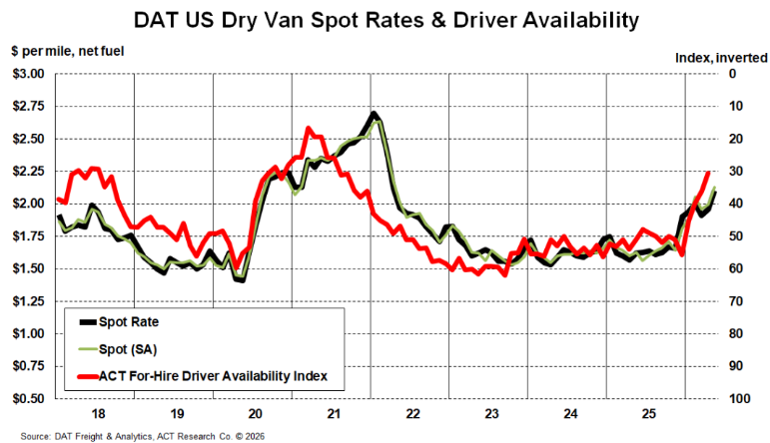
As of May 2026, dry van rates continue to firm as the truckload market moves further into a supply-driven recovery. Freight demand remains uneven, but capacity has tightened meaningfully due to driver availability, regulatory enforcement, and limited fleet expansion. ACT’s May Freight Forecast notes that dry van load-to-truck conditions tightened again around Roadcheck, with rates moving above normal seasonal patterns.
The dry van market is no longer reacting only to short-term disruption. Spot conditions remain elevated year-over-year, and contract rates are beginning to follow as tighter capacity works through bid cycles. Shipper leverage has narrowed, while carriers are seeing improved pricing power, even as fuel, insurance, financing, and equipment costs continue to pressure margins.
Spot Rates
Dry van spot rates remained firm through April and into May, supported by constrained capacity and stronger load-to-truck conditions. Roadcheck added near-term pressure, but the broader story is structural: fewer available trucks, tighter driver supply, and continued regulatory pressure are supporting higher rate floors.
Some seasonal moderation is still possible, especially if freight demand remains choppy. However, dry van spot rates appear less likely to return to the trough conditions seen during the prior downcycle.
Contract Rates
Dry van contract rates are now responding more clearly to sustained spot-market strength. Increases remain measured, but the pricing environment has shifted in carriers’ favor compared with 2024 and 2025.
For shippers, this means bid activity may become less favorable as the year progresses. For carriers, stronger contract pricing should support revenue quality, though profitability remains dependent on managing operating costs.
Capacity Conditions
Capacity remains the primary driver of the dry van rate recovery. Driver availability has tightened, compliance pressure has increased, and below-replacement tractor sales have limited the pace of fleet expansion. ACT’s May commercial vehicle commentary points to an emerging driver shortage and a more carrier-favorable supply-demand balance.
Private fleet contraction is also helping shift more freight back toward the for-hire market. That dynamic, combined with limited expansion appetite, is reinforcing a tighter dry van environment even without a strong demand surge.
Summary
The dry van TL market is firmer entering May 2026, with pricing strength increasingly tied to structural capacity tightening rather than temporary disruption. Spot rates remain elevated, contract rates are improving, and capacity conditions continue to favor carriers more than they did during the prior downturn.
Demand remains uneven, and cost pressure is still limiting fleet expansion. Even so, the dry van market appears to be progressing through the early stages of recovery. Shippers, carriers, brokers, fleets, and investors should continue monitoring load-to-truck trends, contract bid activity, driver availability, and whether higher rates translate into healthier carrier profitability.
As of May 2026, dry van rates remain firmly above prior-cycle lows, with pricing support increasingly tied to structural capacity tightening rather than short-term disruption. Roadcheck added near-term pressure, but the broader trend is being driven by constrained driver availability, regulatory enforcement, and limited fleet expansion. Freight demand remains uneven, but load-to-truck conditions have tightened enough to support higher rate floors and shift more leverage back toward carriers. Contract rates are also beginning to respond as spot-market strength works through bid cycles. While seasonal volatility is still possible, the dry van market continues to move toward balance, with durable rate momentum increasingly supported by capacity contraction, compliance pressure, and cost discipline rather than a broad demand-led surge.

Tim Denoyer
VP & Sr. Analyst

Resources
Whether you’re new to our company or are already a subscriber, we encourage you to take advantage of all our resources.